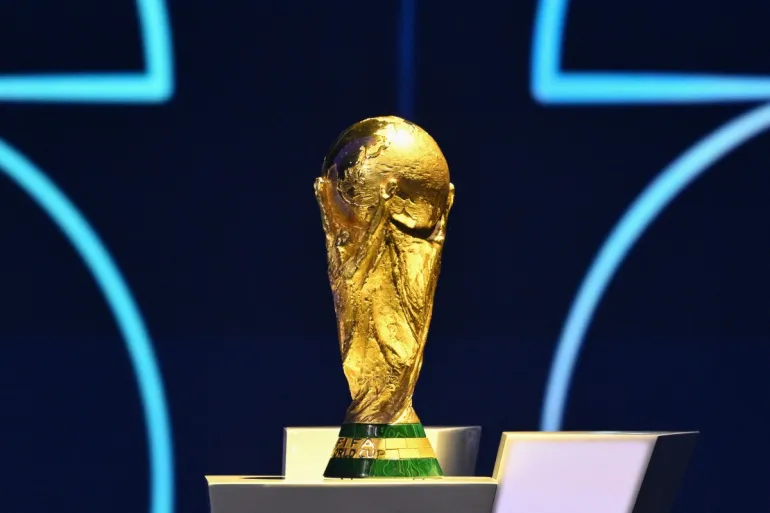
The globe is in the grip of World Cup fever, and it’s a particularly special one for the Arab world.
With a record-setting eight teams taking the field — double the number that participated in World Cup 2022 — this year’s games are an unprecedented opportunity for Arabic athletes and artists to show their talent. And it’s also a windfall for Arabic business, especially e-commerce. Projected to add $40.9 billion to the world economy, Arabic countries are sure to feel the financial headwinds, according to Gulf News. With an estimated audience in the billions, it’s the kind of exposure most marketers only dream of.
“For the countries involved, the prize isn’t necessarily the tournament itself, but the attention it brings,” Josh Gilbert, lead analyst, Middle East at eToro, wrote for Mid East Information. “A strong run in the tournament puts a country in front of a global audience, generating exposure that no tourism budget can replicate.”
With so many Arabic teams in competition, World Cup 2026 is one of the biggest promotional events for the MENA region in recent memory. It’s also a window into countries and cultures that some might be experiencing for the first time. For instance, Billboard reports that Arabic musical artists are more represented than ever before — a trend only likely to build with Morocco co-hosting the tournament in 2030 and Saudi Arabia hosting in 2034. And with more Arabic teams on the field, all it takes is one breakout moment or game to generate curiosity and enthusiasm regionwide.
While the 2026 World Cup is unfolding in cities across Canada, the United States, and Mexico, the boost to North American host countries is projected at $26.2 billion. That means that the rest of the world will still see billions in economic activity, and that makes it the perfect time for businesses to invest in the MENA region. By partnering with experienced regional language service providers who understand regional consumption habits and know how to localize marketing campaigns across dialects, cultures, and localities, e-commerce vendors in particular have a chance to capitalize.
“The effect can flow through hotels, restaurants, sports bars, airlines, broadcasters, streaming platforms, payment providers and consumer brands,” Gilbert wrote for Mid East Information. “Even though matches are overseas, fans will still be spending locally through travel, watch parties, advertising, merchandise, food delivery and hospitality.”
It’s worth noting that the World Cup is only bolstering an economic landscape where e-commerce spending is on the rise. According to Arab News, e-commerce spending in Saudi Arabia rose 17.5% in April, making Arabic expansion an even more enticing prospect for e-commerce vendors seeking new markets.
As Worldef eComerce & Retail observes, World Cup 2026 is also more digital-first than ever before. It’s the first time that AI, prediction markets, and traditional marketing converge to make World Cup 2026 a commercial as well as athletic global phenomenon. That creates more opportunity than ever to experiment with innovative campaigns that include predictive pricing, image recognition linking to purchases, and more.
With football organization and interest growing throughout the region — not to mention Morocco and Saudi Arabia’s upcoming hosting privileges in 2030 and 2034 — it could well be an investment that pays for years to come. And to make the most of that investment, localization services are an essential consideration to resonate with regional consumers.